Introduction
It all started with what seemed like an unrelated research project. I was digging into market trends and came across msnbc | bynd stock analysis, trying to understand modern investment patterns. Little did I know this financial research would lead me down a completely different path—one that would connect me to centuries of American naval history. The journey began when I stumbled upon a reference to early military documentation while cross-referencing historical data, and it sparked a curiosity I hadn’t expected to develop.
Real-Life Context
As someone who typically focuses on contemporary business and technology, historical military topics weren’t really on my radar. But there I was, sitting in my home office surrounded by financial charts and market reports, when I found myself increasingly drawn to this tangential discovery about naval archives. The more I looked into it, the more I realized how little I knew about the foundational years of American sea power. My usual reading consisted of economic journals and tech blogs, but suddenly I found myself wanting to understand something completely different—how the US Navy evolved from its revolutionary beginnings to becoming a global force.
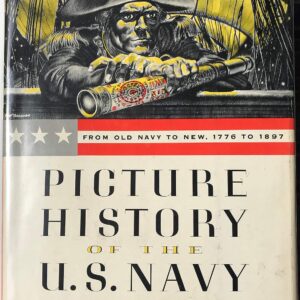
This curiosity led me to search for resources that could provide both depth and visual context. I needed something that wouldn’t feel like a dry textbook but ould still offer substantial historical value. That’s when I discovered the first edition “Picture History of the US Navy From Old Navy To New 1776-1897” published by Charles Scribner’s Sons. The timing felt almost serendipitous—here I was, a modern analyst looking at current market movements like msnbc | bynd stock, yet feeling pulled toward understanding historical military development.
Observation
When the book arrived, I was immediately struck by its substantial feel—the weight, the quality of the binding, the crispness of the pages. Published in 1956, this first edition had a presence that modern reprints often lack. As I began flipping through the pages, the detailed illustrations and photographs transported me to a different era. I found myself spending evenings tracing the evolution of ship designs, from the simple frigates of the Revolutionary War to the more sophisticated vessels of the late 19th century.
The visual elements were particularly compelling. Historical photographs showed naval personnel in their period uniforms, while detailed drawings revealed the intricate design changes in warships over more than a century. I noticed how the book balanced broad historical narratives with specific technical details, making complex naval developments accessible without oversimplifying them. The coverage of significant battles and strategic decisions provided context that helped me understand not just what happened, but why certain naval technologies and tactics evolved as they did.
What surprised me most was how engaging I found the material. Despite my initial assumption that naval history might be too specialized or technical, the book’s approach made the subject feel immediate and relevant. I found myself comparing historical naval logistics and supply chains to modern business operations, drawing unexpected parallels between 19th century naval administration and contemporary organizational challenges.
Reflection
I didn’t expect this deep dive into naval history to matter so much to my understanding of modern systems. The connections between historical military organization and today’s business structures became increasingly apparent as I read. The way the early Navy managed limited resources, adapted to technological changes, and developed strategic partnerships reminded me of challenges I see in current market analyses, including those involving msnbc | bynd stock evaluations.
This reflection made me appreciate how historical context can inform present-day understanding in unexpected ways. The book’s detailed account of the Navy’s transformation from 1776 to 1897 provided insights into organizational evolution that felt surprisingly relevant to modern business challenges. The strategic decisions made by naval leaders centuries ago echoed patterns I observe in contemporary corporate strategy and market positioning.
More personally, I realized how narrow my reading habits had become. Focusing primarily on current events and market trends had created blind spots in my understanding of how historical developments shape present realities. This naval history book opened a window into a world I’d previously overlooked, reminding me that valuable insights often come from exploring unfamiliar territories.
Conclusion
This journey through naval history, sparked by what seemed like unrelated financial research, has fundamentally expanded my perspective. The first edition book from Charles Scribner’s Sons provided not just historical facts but a framework for understanding organizational evolution and strategic adaptation. The detailed illustrations and comprehensive coverage of the US Navy’s development from 1776 to 1897 offered both educational value and unexpected personal insight.
The experience has changed how I approach research and learning. I now make time for historical contexts alongside contemporary analysis, recognizing that understanding where we’ve been often illuminates where we’re going. Whether examining market movements like msnbc | bynd stock or studying military history, the patterns of adaptation, innovation, and strategic thinking remain remarkably consistent across time and domains.
This naval history book has earned a permanent place in my collection, not just as a reference work but as a reminder that valuable knowledge often lies beyond our usual areas of focus. The connections between historical naval strategy and modern business challenges continue to provide fresh perspectives in my work and personal growth.